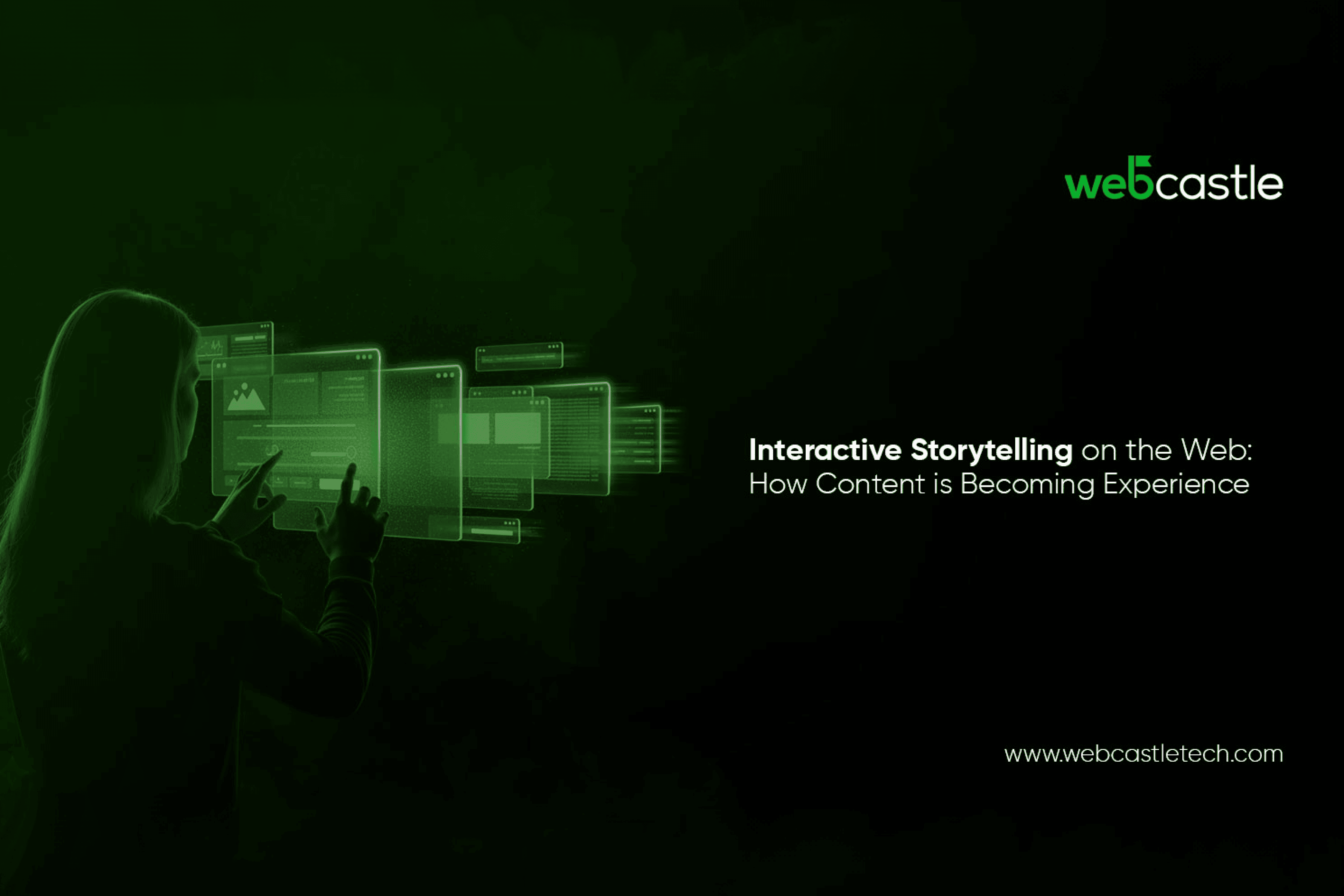
Interactive Storytelling on the Web: How Content is Becoming Experience
Remember the last site that stuck with you? It wasn’t because of perfect formatting. Maybe you scrolled, and the scene changed, or you clicked something and a story moved forward. That is the direction the web is going in now: instead of just reading, people are doing things on the page.
Why web stories don’t feel like flat pages anymore
A lot of older sites were built like digital flyers. Title at the top, paragraphs below, maybe a few images. Today, that approach feels dated. Storytelling in web design has started to copy how we use apps and games instead.
What’s shifting:
- People expect some kind of reaction When they hover, scroll or tap, they want the screen to respond.
- If nothing moves or changes, it feetls like the site is stuck in the past.
Content is planned like a story, not just sections
- There’s a clear starting point, then more detail, then a point where things come together.
- Layout changes, small animations and visual cues quietly point you to “this is next”.
The result is simple: visitors remember the experience, not just the words.
What makes interactive web content feel right (not gimmicky)
It’s easy to throw effects on a page. It’s harder to make them actually useful. Good interactive web content helps people “get it” faster.
Things that usually work:
- Every interaction earns its place Every click should clearly show its result.
- Show extra info only when the user asks, not all at once.
There’s a small, user-driven narrative underneath
- Let visitors pick paths that fit them: for example, “show me the basics” vs. “show me technical details”.
- Their choices change the journey but always lead to a clear next step—contact, demo, signup or download.
When it works, people don’t feel sold to. They feel like they’re exploring with you.
Different ways immersive web experiences show up
“Immersive” isn’t just 3D or heavy animation. It’s mostly how the page responds as you use it.
Common patterns:
- Story pages that change as you scroll You move down the page, and new scenes, charts or visuals slide in at the right time.
- These work well for brand origin stories, impact summaries, feature walkthroughs or timelines.
Interactive tools and explainers
- Things like product configurators, calculators, and “try it in the browser” demos.
- Great for products or services that plain text can’t explain well.
In both cases, visitors shape how the page responds, creating an immersive web experience.
Designing around the user’s journey
If you want a user-driven narrative, you have to think beyond “Where do I put this paragraph?”
A few practical points:
- Start with one clear story Decide the key thing people should understand: a problem, a solution, a product, or a result.
- Divide it into steps users can explore.
Add a little choice, not chaos
- Two or three clear paths are enough (“I’m a founder / I’m a marketer” and “I want a quick view / I want details”).
- Too many options, and visitors get lost or give up.
Keep it light and fast
- Interactions should work on phones, not just big screens.
- Avoid heavy effects that slow everything down—if the page lags, the story dies.
If you get this right, people feel like they are steering the experience, even though you still quietly guide them.
Where WebCastle fits into this
Turning a static page into something interactive is not just a design job. It needs content planning, UX thinking and careful front‑end work. That’s where a team like WebCastle can help.
Here’s what they bring to the table:
- They build sites around a story, not just a template Content, layout and interactions are planned together so the flow feels natural, not bolted on at the end.
- The focus stays on clarity first, effects second.
They know how to keep interactive pages fast
- Modern front‑end stacks, sensible use of animation and performance checks mean immersive parts still load quickly on real devices.
They can add deeper layers when needed
- For projects that need more than basic interaction, their work with AR and advanced interfaces (for example, AR‑driven demos or overlays) can turn a simple story into a richer experience.
They connect creativity to goals
- All this is tied back to actual outcomes—more time on page, better understanding of complex offers, more qualified leads—not just “this looks cool”.
So instead of treating interactive storytelling as a risky experiment, you get a process and a team that has done it before.
Turn one story on your site into an experience
Most websites have at least one story that deserves more attention—a product, service, case study or brand journey hidden in plain text.
Don’t rebuild everything – start with just one story:
- What would this look like if the user could click, scroll or choose their way through it?
- Where could interaction replace long explanations?
- What’s the one action we want at the end?
Once you have rough answers, that’s a good moment to talk to WebCastle about turning that idea into a real, interactive web content experience. From there, you can slowly shift more of your site from static reading to something visitors actually remember using.
Curious how your website story could come alive? Talk to WebCastle now and explore interactive options before you finish reading